Features
Part of Small space living: brief, measure, then circulate
Materials for small space living, compared across Phoenix heat and Miami humidity
Phoenix heat and Miami humidity punish small rooms in different ways, so the material list changes. Here is what holds up in each city for floors and walls.
What to take away
- Materials for small space living split by climatein Miami, moisture decides. In Phoenix, heat and dust do.
- Quartz (Caesarstone, Cambria, Silestone) and porcelain tile (Daltile, Marazzi) hold up in both cities. Solid white oak does not.
- Vinyl plank holds flat in Phoenix. In Miami, the seams are the weak point.
- In Miami, leave a two inch gap behind furniture on exterior walls.
- In Phoenix, shade the west glass from outside before buying any interior blind.
- Anything that touches wiring, vents or an exit window goes to your local building department.
Miami: humidity picks the materials
Miami runs above 70 percent relative humidity for much of the year, and a compact room holds less air to buffer it. Moisture settles into whatever is porous and stays there.
Solid wood is the first casualty. Oak and maple tabletops swell at the edges, then cup. White oak, whose pores are closed by tyloses, resists rot better than red oak, but neither stays flat through a Miami summer.
Sealed butcher block survives better. A John Boos maple top typically runs $150 to $600 depending on size, and it keeps its shape only if you re-oil it twice a year.
Medium-density fiberboard is worse. MDF swells permanently once water reaches the core, and no finish reverses it. In a Miami one bedroom, choose plywood with sealed edges or powder-coated steel for shelving.
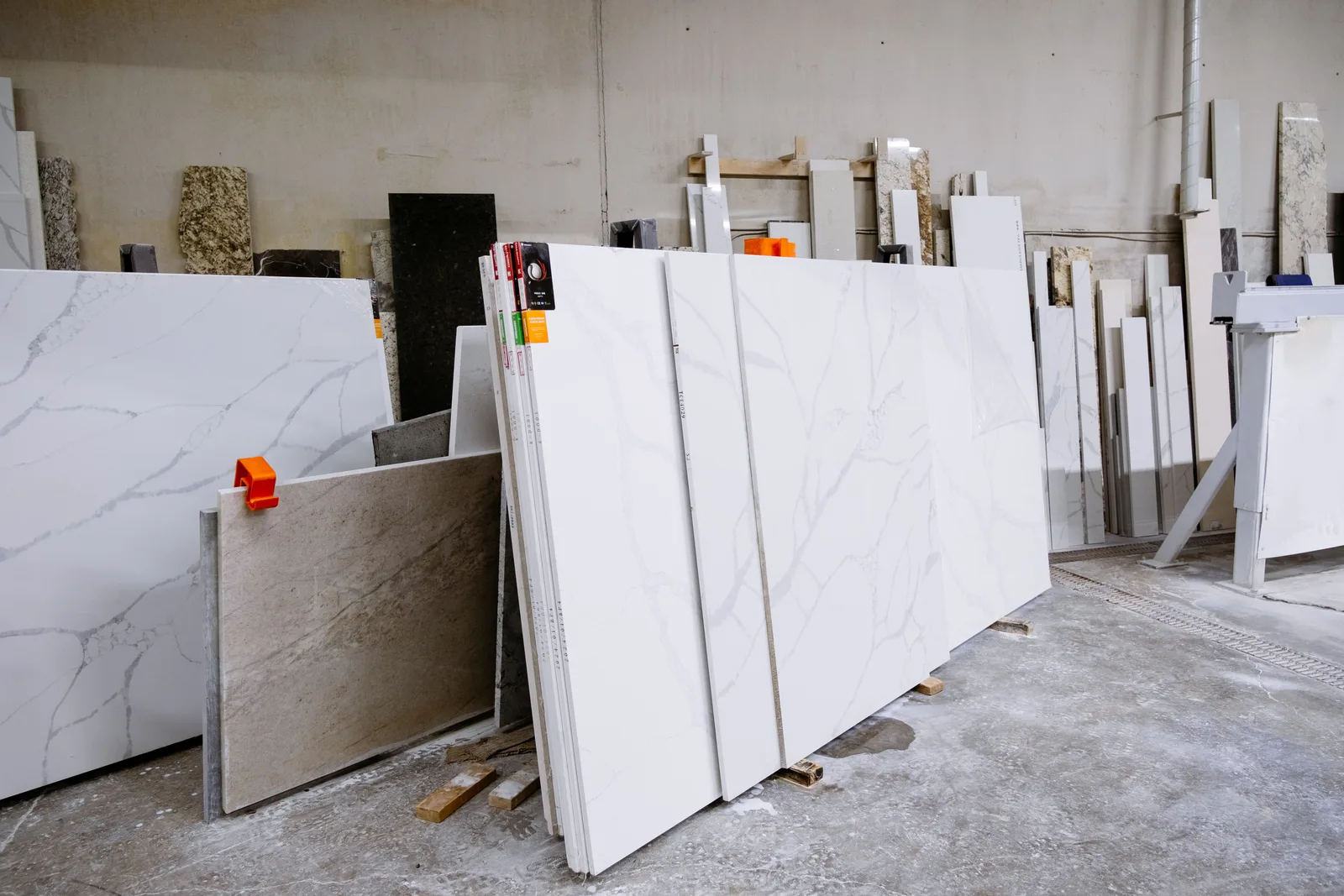
Porcelain tile and quartz are the two surfaces that ignore Miami. Both take a wipe, neither feeds mold, and neither cares about a wet swimsuit dropped on the counter.
Daltile and Marazzi porcelain absorbs less than 0.5 percent of its weight in water, the threshold for the porcelain grade. Caesarstone, Cambria and Silestone quartz are mostly ground stone bound with resin, so they need no sealing.
Fabricators in most markets quote quartz at roughly $55 to $110 per square foot installed. Porcelain tile material runs about $2 to $12 per square foot, with labor on top.
Phoenix: heat and dust pick them
Phoenix hits 110F with single-digit humidity. Wood dries, shrinks and opens at the joints. A solid oak table that was tight in March will show gaps by August.
That same dryness is why laminate and luxury vinyl plank outperform. LifeProof and Shaw plank lines move less than wood, and they do not need humidity to stay flat. LifeProof plank typically sells for $3 to $5 per square foot at Home Depot.
Plank warranties usually name an indoor temperature range, and a sun-baked Arizona garage or sun room often sits outside it. Read the spec sheet before you lay plank in either.
Dust is the second filter. Open shelving in a dusty, windy city is a standing cleaning commitment, which is why it sits near the bottom of our ranking of which upgrades add everyday value.
Phoenix dust storms arrive on monsoon winds from June through September. Powder-coated steel shelves wipe clean where open wood grain holds grit.
Exterior shade beats any interior blind. A west-facing window in a compact room will cook the room no matter how pale the walls are. An exterior roller shade, an awning or a 90 percent shade screen stops the heat before it crosses the glass.
The same materials, judged in both cities
Miami verdict
- Caesarstone and Cambria quartz
- Holds up
- Daltile and Marazzi porcelain tile
- Holds up
- Powder-coated steel (IKEA Hyllis)
- Holds up
- John Boos sealed butcher block
- With re-oiling
- Solid white oak
- Swells, cups
- MDF
- Fails once wet
- LifeProof and Shaw vinyl plank
- Watch the seams
- Rattan and cane
- Mildews
- Marine-grade plywood
- Holds with sealed edges
Phoenix verdict
- Caesarstone and Cambria quartz
- Holds up
- Daltile and Marazzi porcelain tile
- Holds up
- Powder-coated steel (IKEA Hyllis)
- Holds up
- John Boos sealed butcher block
- With re-oiling
- Solid white oak
- Shrinks, gaps
- MDF
- Fails once wet
- LifeProof and Shaw vinyl plank
- Holds up
- Rattan and cane
- Dries and cracks
- Marine-grade plywood
- Holds with sealed edges
Why
- Caesarstone and Cambria quartz
- Non-porous, no sealing; about $55 to $110 per square foot installed
- Daltile and Marazzi porcelain tile
- Absorbs under 0.5 percent of its weight in water
- Powder-coated steel (IKEA Hyllis)
- No swelling, no warping; Hyllis units list under $30
- John Boos sealed butcher block
- Re-oil twice a year
- Solid white oak
- Moves with humidity
- MDF
- Core swells permanently
- LifeProof and Shaw vinyl plank
- $3 to $5 per square foot; heat tolerant, seams trap water
- Rattan and cane
- Organic, both climates
- Marine-grade plywood
- Exterior glue; seal every cut edge
Cold, smoke and storm, briefly
FEMA notes a winter storm can cut off heat, power and communication for hours or days. In a small home that means one warm room, one charged lantern, and no fuel-burning appliance ever run indoors.
Wildfire smoke is a mix of gases and fine particles. The U.S. Fire Administration's advice on reducing exposure is to check air quality, clean the air indoors, and avoid equipment that pulls outside air in during a smoke event.
Sizing a filter for one closed room, and checking the filter cost before you buy, is part of our small space product protocol.
Miami's hurricane season runs June 1 through November 30. Miami-Dade and Broward sit in the High Velocity Hurricane Zone, where impact windows and shutters need a Miami-Dade Notice of Acceptance to pass inspection.
Read the building, not the label
A climate zone is a starting point. Floor level, orientation, mechanical system and neighbors can matter more than the map. A top-floor unit in Seattle can overheat while a ground-floor unit in Dallas stays cold.
In Phoenix, an interior wall runs cooler than a west wall. In Miami, an exterior wall runs wetter than an interior one. Moving a solid wood piece off those walls buys time in both cities.
The planning method in our field guide works in any region, and the trade-offs in our comparison of layout materials shift with humidity more than with taste. If a fix touches ventilation, wiring or an exit, confirm it with your local building department first.
Common questions
Does a dehumidifier fix a damp Miami closet?
It helps, but it treats a symptom. Find the moisture source and the still air first, then size the unit for the closet volume. Closet-sized units are typically rated 10 to 22 pints per day; a larger room needs more capacity.
Can I use MDF cabinets in a Phoenix kitchen?
Yes, if they stay dry. MDF handles Phoenix heat fine. It fails the moment water reaches the core, so keep sinks and dishwashers sealed. Use plywood where the plumbing enters.
Is solid wood ever the right call in either city?
Yes, in a bedroom or a dry hallway. White oak or hard maple on an interior wall can last. Keep wood out of bathrooms, kitchens and any room with a shower or a pool door.
Should coastal homes avoid wood furniture?
No, but favor finishes you can renew and hardware that resists corrosion. Near Biscayne Bay and the Gulf, 316 stainless and powder-coated steel outlast brass.