Maintenance
Part of Modular storage systems reviews, sorted out: the 2027 view
Modular storage regrets: five problems to check before you buy
Five modular storage regrets, from buying before measuring to unanchored height, plus fire safety clearances and buying checks to prevent them.
What to take away
- Buying before measuring what you own is the origin of most regret.
- A discontinued component turns a modular system into a fixed one.
- Storage placed beside heat is a safety problem, not a style problem.
- Unanchored height is the regret that can injure somebody.
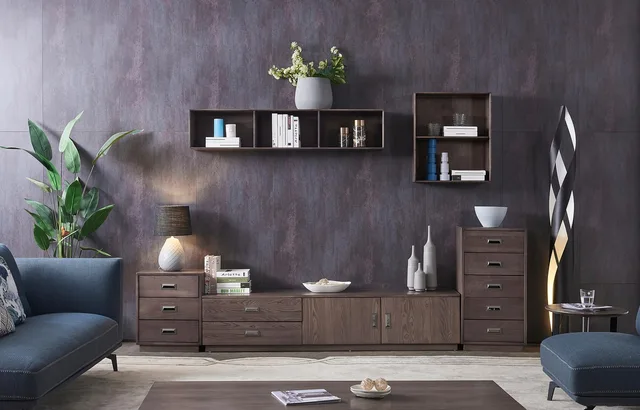
Modular storage promises adaptability. Most of the regret comes from the ways a system turns out to be less adaptable than advertised, plus two placement decisions that matter more than expected.
Regret one: designing for volume you never measured
People specify shelving by wall length rather than by what they own. The result is either half empty bays or a system that was full on installation day.
Fix in advance: box and measure a representative sample before ordering. Note how many items are tall, how many are heavy, and how many you use weekly.
Regret two: shelf spacing set once and never changed
Adjustable systems are adjustable in theory. In practice, moving a shelf requires unloading it, which nobody does. Set your most used spacings correctly at installation. Changing what lives on which shelf is still the cheapest correction available, and our piece on design mistake costs says to exhaust that tier before spending anything.
Regret three: the component that stopped being made
This is the specific failure of modular systems. When a manufacturer changes a bracket profile or discontinues a finish, your expandable system becomes a fixed one.
Before buying, ask how long the current range has been in production, whether components are sold individually, and whether the previous generation is still supported.
Regret four: storage that ended up beside a heat source
Compact homes push storage into whatever wall is free, and sometimes that wall has a radiator, a baseboard heater or a space heater in front of it.
The U.S. Fire Administration reports that heating remained the second leading cause of home fires in 2021, with an estimated 32,200 home heating fires. Portable heater fires were only about 3 percent of home heating fires a year from 2017 to 2019, yet they accounted for 41 percent of fatal heating fires in homes.
Its standing advice: keep anything that can burn at least three feet from fireplaces, wood stoves, radiators, space heaters and candles. Never use an oven to heat a home. Turn space heaters off when leaving the room or going to bed.
A bay of shelving is a large quantity of things that can burn. Place it accordingly.
A wall that carries a radiator is rarely the right wall for storage, however convenient the length looks on a plan.
How often that mistake appears depends on the climate. Our piece on regional design mistakes puts blocked heat emitters at the top of the cold region list, usually followed by a portable heater bought to compensate.
Regret five: height without anchoring
Tall shelving in a compact room stands within falling distance of everybody in it. FEMA's earthquake guidance lists securing heavy items such as bookcases, refrigerators, water heaters and televisions as part of protecting a home, alongside practicing how to protect yourself and keeping supplies including a flashlight and a fire extinguisher.
The advice is not only for seismic regions. Anywhere a child lives, unanchored height is the regret with the worst outcome.
| Regret | Prevented by |
|---|---|
| Wrong volume | Measuring what you own |
| Fixed spacing | Setting it right on day one |
| Discontinued parts | Asking about the product line |
| Beside a heat source | Keeping clearances |
| Unanchored height | Anchoring to structure |
The buying criteria that avoid all five are in our modular storage review guide, and the equivalent list for construction projects is in our piece on remodeling regrets.