Costs
Part of Eight Small Space Design Mistakes and the Fixes That Hold Up in Compact Homes
4 parts of small space design mistakes, explained
Four small space design mistakes, what each one costs to correct, and how to tell a fix worth paying for from a compromise you can live with.
What to take away
- The four small space design mistakes are furniture bought before the room was measured, a layout that blocks its own walkway, lighting that only points down, and storage that eats the floor.
- Each mistake has a correction tier, from free rearranging to construction.
- Typical correction costs range from $0 for a rearrange to $15 to $40 for a clamp lamp, $150 to $500 for an added outlet, and $1,500 to $7,000 or more to move plumbing. Those are typical ranges, not quotes.
- A correction that touches safety is never a budget decision.
- Keep an emergency fund separate from the correction fund, so a repair does not become a debt.
Small space design mistakes repeat in compact rooms. The four below are specific. Each one has a tell, a cause, and a correction that lands in a different cost tier.
Mistake one: furniture bought before the room was measured
A sofa ordered from a photo arrives two inches too deep for the walkway. The room was never measured, so nobody knew. The mistake is buying by picture before checking the room's real dimensions.
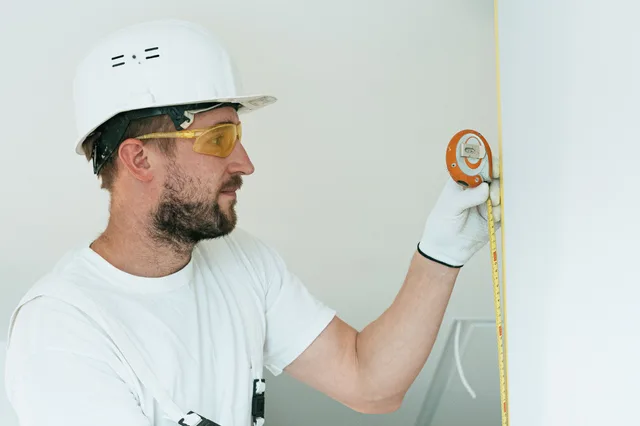
Measure the swing of every door and drawer before shopping. Then measure the diagonal of the tightest turn the piece must pass through. A laser distance measurer from Bosch or DeWalt typically costs $40 to $100. A tape measure costs under $10.
The correction is usually free or cheap: return the piece, or swap it with something already in the house. Return shipping on a sofa can run $0 to $200 in typical markets. If the return window has closed, the mistake becomes a tier two cost.
Mistake two: a layout that blocks its own walkway
A chair pulled out from a desk stops the only path to the window. The room works until someone needs to walk through it. The mistake is a layout that ignores the body moving through the space.
Walk the room with your hands full. If you have to turn sideways, the path is too narrow.
Rearranging is free. The mistake is on the list because people buy storage to solve it, and storage makes the path narrower.
Mistake three: lighting that only points down
One ceiling fixture in the middle of a small room leaves the corners dark and the work surface in your own shadow. The mistake is a single downlight doing every job.
Add a task light where you actually read, cook or work. A clamp lamp and an extension cord cost less than a trade visit. A basic clamp lamp typically sells for $15 to $40, and a 6-foot extension cord for $10 to $25.
If the room needs a new outlet for that lamp, the mistake moves to tier three. An electrician adding an outlet typically charges $150 to $500, depending on wall access and local rates. Our guide to which space saving room ideas upgrades pay off scores that kind of work against how often you will use it.
Mistake four: storage that eats the floor
A freestanding cabinet takes more floor than the clutter it hides. In a small room, floor area is the scarcest thing you own. The mistake is adding storage volume at the cost of walking, sitting or opening space.
Go vertical: wall shelves, over-door hooks, the space above a fridge. 3M Command Hooks use adhesive strips and remove without nails on many painted surfaces. An IKEA Kallax unit can act as a room divider, but IKEA tells buyers to anchor it to the wall. The correction is tier one if you already own the brackets.
The failure list behind these four is in our guide to small space design mistakes. The layered budgeting method they sit inside is in our small space budget guide.
Sorting a correction into a tier
Example
- Free
- Move a side table ($0)
- Under a few hundred
- Add a task light ($15 to $40 lamp; $10 to $25 cord)
- Trade visit
- Add an outlet ($150 to $500 typical)
- Construction
- Move plumbing ($1,500 to $7,000 or more typical)
- Safety
- Clear an exit ($0)
Decide by
- Free
- Just do it
- Under a few hundred
- Weekly benefit
- Trade visit
- Frequency and safety
- Construction
- Only with a remodel
- Safety
- Not a budget question
Ask three questions before spending. How many times a week does this cost you something? Can it be undone? Does it affect safety? If the answer to the last one is yes, it is not a budget decision.
If a wall is already open for a remodel, the ranking changes. Our guide to which small room remodeling upgrades add everyday value sorts work by whether an open wall is the only chance to do it.
Where fixed geometry sets the ceiling
Some mistakes cannot be fixed without moving plumbing. Learn fixture dimensions before assuming a correction is cheap. A toilet rough-in, for example, is the distance from the finished back wall to the drain center. Most toilets use a 12-inch rough-in, but 10-inch and 14-inch models are also sold.
The Access Board's guide to toilet rooms explains how ADA Standards treat these spaces for covered facilities. Homes are not covered by those standards; your fixture requirements come from your local plumbing and building code.
Bathroom corrections in a compact room are constrained by clearances around fixtures. A change that looks like a swap often turns out to be construction.
Fund the corrections that protect you
Correction budgets should not consume the money that covers you when something goes wrong. FEMA's financial preparedness guidance sets out the baseline.
Gather financial, insurance, medical and household records where you can reach them. Keep small bills at home, because card systems may not work during a disaster. FEMA notes homeowners insurance does not typically cover flooding.
In a small home, that argues for keeping documents compact, findable and duplicated rather than filed in a drawer under the bed.
Common questions
Should I wait and fix everything at once?
Only for construction-tier work. For free, cheap and trade-visit corrections, fix each one when it starts costing you something weekly.
Is it worth moving a bathroom door?
Sometimes. Price it before assuming it is out of reach, and check whether the swing clears the fixtures on both sides.
Do renters have any of these options?
Tiers one and two, and tier three with written permission from the landlord. Ask before drilling or adding an outlet.
What should never be deferred?
A blocked exit, a disabled alarm, or a damaged cord. Those are safety corrections, not budget lines.