Rules
Part of Small room renovation: what to ask before you sign a quote
5 things to weigh up on small room renovation costs
Five cost lines decide a small room renovation budget, covering labor, materials, permits, debris disposal and the surprises behind the walls.
What to take away
- Labor is the largest line in small room renovation costs, and it scales with access, not floor area. In most markets as of 2026, licensed trades bill $65 to $150 per hour.
- Allowances are the most common place a quote hides its real number. A tile allowance can be $1,200 or $4,000, a $2,800 gap for the same labor.
- Permit fees typically run $150 to $500 for a small bathroom, and inspection corrections belong in the budget before work starts.
- Disposal and protection typically cost $300 to $700 for a 10 to 20 yard dumpster, plus floor protection and dust barriers.
- Contingency at 15 to 20 percent of hard cost covers what is behind the walls, not what you forgot to list.
A small room renovation costs what five lines say it costs: labor, materials, permits, disposal and contingency. The money sits in those lines, and a quote looks simple because it is short.
1. Labor: $65 to $150 per hour, priced by access
A 60 square foot bathroom can cost more in labor than a 200 square foot bedroom. Trades bill hours, and hours follow how hard the room is to work in.
Trade hourly rates
- Electrician/plumber$85-$150 per hour
- Carpenter$60-$110 per hour
- General laborer$35-$60 per hour
In most markets as of 2026, a licensed electrician or plumber bills $85 to $150 per hour. A carpenter bills $60 to $110 per hour, and a general laborer bills $35 to $60 per hour. Those are typical ranges, not fixed rates.
Narrow doorways, stair carries, shared walls and occupied homes all add time. Ask the contractor to state the assumed crew days in the bid, then compare that number across quotes rather than comparing totals. A two-trade day can add $500 to $1,200 before materials.
2. Materials and the allowance trap
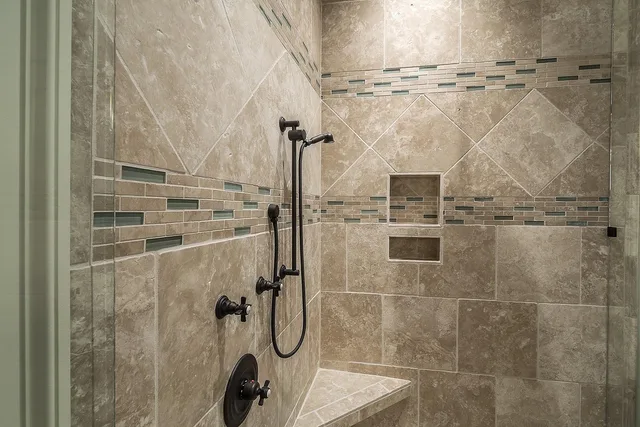
Tile, fixtures, vanities and hardware are usually listed as allowances: a placeholder figure the contractor carries until you choose. A $1,200 tile allowance and a $4,000 one produce quotes that look $2,800 apart for identical labor.
Allowance trap in numbers
- $1,200tile allowance
- $4,000tile allowance
- $2,800quote gap for identical labor
Get every allowance written with its figure and its unit. A Moen Posi-Temp shower valve typically costs $100 to $200. A Kohler Highline toilet runs about $300 to $500. Schluter Kerdi-Board waterproofing panels run about $25 to $50 per sheet in most markets.
Home Depot and Lowe's publish tile prices by square foot, often $2 to $15. Our guide to small room renovation costs and the products worth testing covers which finishes hold up in a compact wet room.
3. Permits, inspections and the code edition
Permit fees for a small bathroom typically run $150 to $500, and some cities charge by project value. The fee schedule is published by your local building department. Ask who pulls the permit and which code edition the bid is priced against.
Permit and code checks
- Who pulls the permit?
- Which code edition is priced?
- Is the fee $150 to $500?
- Does wiring or gas need a licensed pro?
Adopted editions differ between states and between neighboring towns. The National Fire Protection Association publishes maps showing which edition of the National Electrical Code each state enforces. A bid priced to a different edition than yours has priced the wrong job.
Any work on wiring, gas, structural walls or egress windows needs a licensed engineer or electrician and your local inspector. The National Building Code of Canada, published by the National Research Council of Canada, and the ADA Standards for Accessible Design from the U.S. Department of Justice set the same kind of floor for Canadian and accessible work.
4. Disposal, protection and daily cleanup
Demolition waste leaves the site in a container, and the container is a line item. So is floor protection, dust barriers and the daily sweep.
Disposal and protection costs
- 10-yard dumpster$300-$600 per week
- 20-yard container$400-$700
- Dump fees$50-$100 per ton
- Ram Board$30-$50 per roll
- ZipWall kit$100-$300
A 10-yard dumpster rental typically costs $300 to $600 per week. A 20-yard container runs $400 to $700 in most markets as of 2026. Dump fees can add $50 to $100 per ton. Waste Management, Republic Services and local haulers quote these rates by ZIP code.
Ram Board floor protection runs about $30 to $50 per roll. A ZipWall dust barrier kit costs about $100 to $300.
Ask whether disposal is included, where the container sits, and who pays the dump fee if the load is heavier than expected. These are small numbers that turn into change orders when they are left out.
5. Contingency for what is behind the walls
Every small room hides something: old wiring, a vent that cannot move, water damage under a threshold. Contingency is the line that pays for it. A hidden water leak repair can add $500 to $3,000.
Contingency math
15% of $15,000 = $2,250
Hidden water leak repair: $500-$3,000
Set contingency as a % of hard cost
Set it as a percentage of the hard cost and name the figure in the contract. On a $15,000 hard cost, 15 percent is $2,250. Then agree in writing what happens when the discovery is large enough to stop work.
Worked example
Take a 60 square foot bathroom. Let L be labor, M materials, P permits, D disposal and C contingency at 15 percent of L plus M.
| Line | What drives it | Ask for |
|---|---|---|
| Labor | Crew days, access, occupied home | Assumed crew days; $65 to $150 per trade hour |
| Materials | Allowance figures and units | Each allowance named; tile $2 to $15 per square foot |
| Permits | Local fee schedule, code edition | Who pulls it; $150 to $500 typical |
| Disposal | Container size, dump fees | Included or not; $300 to $700 per container |
| Contingency | Condition behind walls | Percentage and trigger; 15 to 20 percent |
The total is L + M + P + D + C. Substitute your own quotes for each variable; the arithmetic does not change.
Common questions
Should I compare quotes by total or by line?
By line. Totals hide allowances, exclusions and assumed crew days, which is where two bids for the same room diverge.
Who decides which code edition applies to my renovation?
Your local building department, not the contractor. Call them before you sign and ask which edition is enforced and whether your scope needs a permit.
Is a permit always required for a small room?
It depends on the scope and the jurisdiction. Wired lighting, new circuits, plumbing moves and window changes usually trigger one; confirm with your building department.
How do I check a contractor before signing?
Verify the license with the issuing body, ask for references from the same building type, and read our guide to vetting a contractor for a compact room. The budget structure these lines feed into is in our renovation costs guide, and the hiring conversation itself is covered in what to ask before hiring help.
Fires during renovation start from combustible waste and hot work. FEMA's page on home fires explains how fast conditions turn, and a working smoke alarm is the difference. Ask who disables alarms, when, and who restores them.